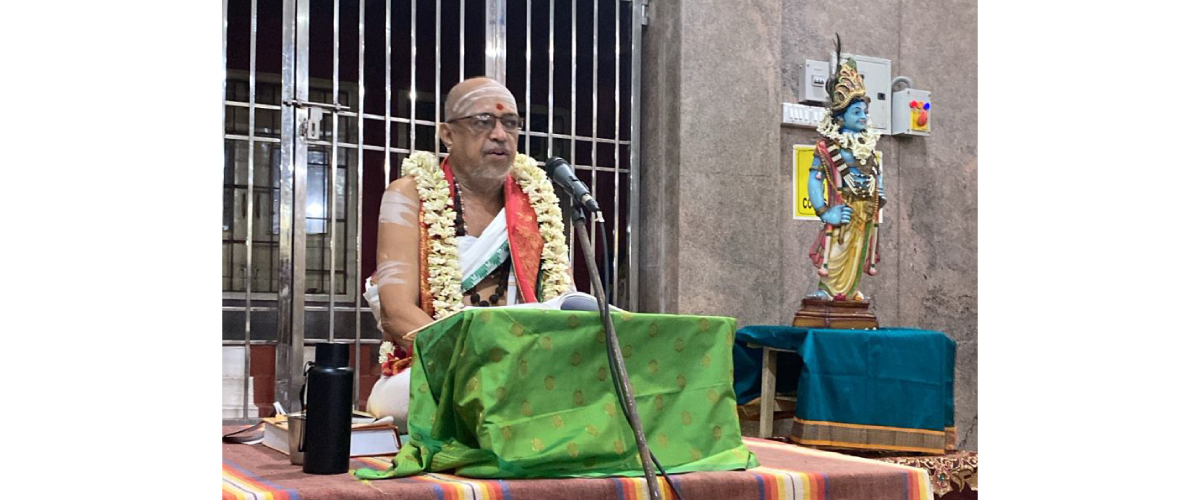
Brahmashree L. Muniswara Sastry is a distinguished Vedic scholar, astrologer, purohit, and spiritual guide whose life exemplifies an unwavering commitment to preserving and propagating the timeless principles of Sanatana Dharma. With more than 55 years of dedicated service to Vedic traditions, he has established himself as a respected spiritual figure, guiding individuals and communities through sacred rituals, scriptural teachings, astrological knowledge, and devotional practices. Rooted in traditional wisdom and guided by the blessings of revered spiritual masters, his journey reflects a profound belief in the transformative power of faith, discipline, compassion, and selfless service. Through his continuous efforts to make Vedic knowledge accessible to society, he remains committed to preserving India's spiritual heritage while inspiring future generations to embrace the values of righteousness, devotion, and inner harmony.
Born in 1953 in Seithur, Tamil Nadu, Brahmashree L. Muniswara Sastry developed a lifelong association with Vedic learning and religious traditions. His spiritual journey has been shaped by years of dedicated study, disciplined practice, and service to devotees seeking religious guidance and spiritual understanding. His work encompasses the responsibilities of a traditional purohit, the interpretative knowledge of an astrologer, and the broader role of a spiritual mentor. By integrating these responsibilities, he has contributed to the continuation of religious customs and the transmission of sacred knowledge across generations. His approach places considerable emphasis on the practical relevance of spiritual teachings, encouraging individuals to incorporate devotion, ethical conduct, and self-discipline into their everyday lives.
Currently serving as the Kshetra Acharya of Velachery Ganapathi Satchidananda Ashram in Chennai, he occupies an important position within the spiritual community. He also serves as a spiritual guide to the Vedabharathi Organization, extending his guidance through religious programmes, devotional gatherings, and initiatives focused on Vedic education. These responsibilities reflect his dedication to nurturing spiritual awareness and strengthening the connection between traditional religious practices and contemporary society. His association with respected spiritual institutions has enabled him to reach devotees from diverse backgrounds, offering guidance grounded in established Vedic principles and the enduring teachings of Sanatana Dharma.
A significant influence on his spiritual outlook has been the blessings of Jagadguru Sri Kanchi Acharya Swamigal. Such spiritual guidance has strengthened his commitment to the preservation of Vedic traditions and the dissemination of their philosophical and ethical foundations. For him, spirituality is not confined to ceremonial observances; it is a comprehensive way of life that encourages humility, discipline, devotion, and responsibility towards others. Through his interactions with devotees, he seeks to reinforce the importance of maintaining cultural continuity while understanding the deeper significance of religious practices.
One of his principal contributions lies in conducting Bhagavad Gita classes, spiritual discourses, Nama Sankeertanam, and homams. These activities provide opportunities for devotees to engage with sacred texts, participate in devotional traditions, and develop a deeper understanding of spiritual principles. The Bhagavad Gita, with its teachings on duty, detachment, wisdom, and righteous action, occupies a particularly important place in this work. By sharing its philosophical insights, he encourages people to approach life's challenges with clarity, patience, and faith. Similarly, Nama Sankeertanam creates an atmosphere of collective devotion, while homams preserve the ritual traditions through which devotees express reverence and seek divine blessings.
His spiritual activities also extend beyond conventional religious settings. He conducts Samudra Harathi on every Pournami, or full-moon day, along India's coastlines. This devotional observance reflects reverence for nature and the sacred significance associated with water in Indian spiritual traditions. By bringing devotees together for these gatherings, he helps sustain collective participation in religious customs and encourages a sense of spiritual responsibility towards the natural world. Such initiatives demonstrate his commitment to keeping traditional observances meaningful and accessible to communities across different locations.
Another notable chapter in his spiritual journey was his participation in the Kashi Vishwanath Temple Lokaarpanam, where he was invited as a special guest of the Prime Minister's Office. The occasion represented an important milestone in his religious service and reflected the wider recognition associated with his engagement in spiritual and cultural activities. His participation in a gathering of national significance further underscored his association with India's living religious heritage and the continued relevance of traditional spiritual leadership.
He also conducted a seven-day Saptaaham during the Maha Kumbh Mela, one of the most significant gatherings in the Hindu religious calendar. A Saptaaham traditionally involves an extended period of scriptural narration, devotional reflection, and spiritual discourse. Through this programme, he contributed to an environment centred on faith, collective worship, and the contemplation of sacred teachings. His involvement in such an occasion reflects the dedication required to sustain traditional forms of religious instruction and provide devotees with opportunities for deeper spiritual engagement.
Among devotees, he is popularly known as “Muhurtha Azhagar,” a name associated with his expertise in selecting auspicious timings for important occasions. His work as an astrologer and purohit connects traditional knowledge with significant personal and family milestones, including religious ceremonies and other customary observances. For many people, such guidance represents an opportunity to honour inherited traditions and approach important decisions with religious conviction. Through this responsibility, he continues to serve communities seeking to maintain the cultural practices that have shaped Hindu social and spiritual life for generations.
In 2000, he founded the Sathvidhya Sthanam Trust, establishing an institutional platform through which his commitment to spiritual education and the preservation of traditional knowledge could continue. The trust reflects his belief that safeguarding Vedic heritage requires sustained effort, organised initiatives, and the participation of future generations. By promoting awareness of spiritual values and encouraging engagement with traditional learning, his work seeks to ensure that ancient wisdom remains relevant within a rapidly changing society.
Brahmashree L. Muniswara Sastry's contribution is ultimately defined by the consistency of his service and his dedication to the principles he represents. His decades of involvement in Vedic scholarship, religious observances, spiritual instruction, and community engagement demonstrate a life directed towards devotion and cultural preservation. Rather than viewing spirituality as an isolated pursuit, he presents it as a foundation for personal discipline, social harmony, and responsible living.
As India's traditional knowledge systems continue to attract renewed interest, his work highlights the importance of spiritual teachers who preserve inherited wisdom while communicating its significance to contemporary audiences. Through his teachings, religious responsibilities, and devotional initiatives, he continues to uphold the values of Sanatana Dharma and encourage a deeper appreciation of India's spiritual traditions. His enduring commitment stands as a testament to the role of dedicated spiritual leadership in sustaining faith, strengthening cultural identity, and transmitting timeless wisdom to generations yet to come.